Urban Lung Rescue.

We know living in urban areas is challenging for our lungs due to increased air pollution.

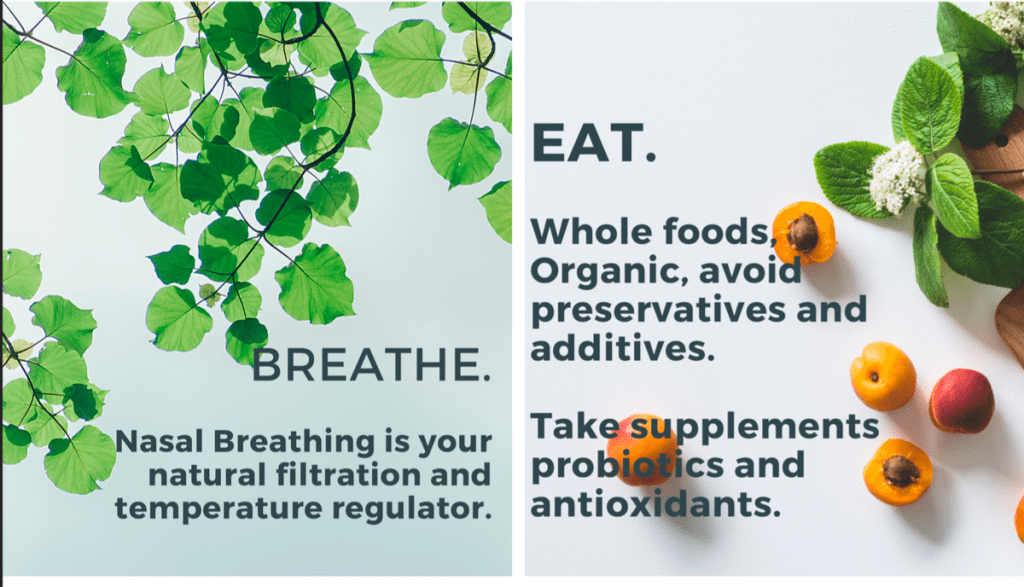
Eating well, nourishing yourself and clearing your home of toxins are simple ways to live a little healthier.

Here are some other simple things you can do:

  • Avoid outdoor exercise during times of high pollution
  • Use natural air purifiers to filter out pollutants and get out for a walk in the forest
  • Surround yourself with trees and other greenery in urban areas can help improve air quality and create a healthier environment for your whole family.
Eat to Heal Your Brain

A friend of mine recently fell and hit his head. He was found unconscious and was rushed to the hospital where he stayed in the ICU for many days, with brain bleeding and fractures in his skull. Luckily he is on the mend, though it is a slow, slow, road to recovery but he is improving every day.

It is important to act quickly to speed healing, improve recovery time and reduce chances of permanent damage.

Consider that ‘Traumatic Brain Injury’ (TBI) is not just a severe brain injury after a car crash or massive fall. TBI is any form of concussion. It affects so many of our youth and has been in the news more and more as professional athletes come forward to talk about the impact of one or many small or large concussions – depression and anger are common post-concussion symptoms.

Nutrition for recovery: Along with introducing high-quality nutritional supplements, increase your healthy fats, eat high-quality protein’s with each meal and reduce inflammation by eliminating gluten and dairy.

  • Consume foods rich in zinc, magnesium and antioxidants to replenish your brain after injury
  • Eliminate inflammatory foods like dairy and gluten
    • Why? Anti-Inflammatory foods increase energy levels and decrease brain fog
    • Reduction in energy slows down healing
  • Correcting elevated blood sugar levels is key for brain healing
    • Why? Early in a TBI, brain glucose levels rise and then drop below normal
    • Giving high sugar foods (foods that rapidly convert to glucose in the body) to TBI patients worsens outcomes
  • Eliminate dairy
    • Why? Dairy is very inflammatory, you should avoid or limit, even after healing
  • Eliminate Gluten & Grains (including rice, corn, and grains that contain gluten: wheat, barley, and rye)
    • Why? Modern day grains are can promote further inflammation in the body and should be avoided when trying to heal

The foods to include are:

  • Water
    • Drink Enough Water – your brain is 73% water!
    • Why? Helps you digest and absorb nutrients, feel focused and alert, assists in cell growth, temperature regulation and circulatory system, which is often negatively affected by post-concussion syndrome. 
  • Bone broth
    • Why? Reduces chronic inflammation, improves your immune system
    • Provides a wide variety of rich minerals and amino acids, including calcium, iron, magnesium, potassium, zinc, and selenium.
    • Other benefits: heals the digestive tract, anti-aging, supports skin health
  • Healthy fats
    • Why? Healthy fats regulate inflammation processes in the body – your brain is made up of 60% fat
      • Brain matter is mostly made up of Omega 3 fats that help rebuild your brain cells, act as a carrier of nutrients and help with satiety
    • Include at every meal: avocados, coconut oil, olives, olive oil, nuts
  • Eat a high-quality protein: with each meal
    • Local & organic are void of disrupting hormones and provide minerals, healthy fats, and energy. Types: grass-fed, pasture-raised, wild caught…Organ meats
    • If you are feeling nauseous, or vomiting try a shake with whey protein with added branched-chain amino acids
  • Colourful vegetables (loads of them – reminder to avoid nightshades)
    • Vegetables phytonutrient and fibre rich
  • Fruits: rely on low GI berries and apples
    • many contain antioxidants that protect your cells from damage (including environmental damage and toxins)
  • Fermented foods (like sauerkraut)
  • Fish and shellfish (as long as there is no allergy, these foods are a rich source of nutrients)
  • Nutritional Supplements:
    • Creatine
      • Supports cognition, an amino acid helps to prevent damage after a TBI
      • Increases energy production in brain cells
    • Fish Oil
      • Rich in Omega 3 fatty acids
      • Crucial to reduce brain inflammation, for recovery and protect against future TBI
    • Vitamin D
      • Protective and can prevent post-concussion syndrome
      • Take therapeutic doses
    • Magnesium
      • Crucial for overall brain function
      • Prevents delayed brain injury and post-concussion syndrome
    • Glutathione
      • Body’s most abundant antioxidant
      • Reduces brain tissue damage by 70%, if administered intravenously after injury
      • If, you cannot get intravenously, supplement with Vitamin C and N-acetyl cysteine (NAC)

Overview of the Brain – the central control unit of our bodies and main organ of our central nervous system (CNS). Our brains manage most of our activities, our emotions, our decision making, our cognition- long and short term memory.

  • Brain Facts:
    • Weigh on average 3lbs –
    • Representing only 2% of our overall body mass but uses:
      • 25% of all the energy
      • 20% of the total blood
      • 20% of the total oxygen
    • Made of soft tissue:
      • gray and white matter, containing the nerve cells
      • non-neuronal cells (which help to maintain neurons and brain health); and
      • small blood vessels.
  • Three main parts of the Brain:
    • Brainstem: connects the brain with the spinal chord
    • Cerebellum: located at the back of the head (ancient part of the brain)
      • balance and equilibrium
      • decision-making
      • regulate learned movements (walking, tying shoes)
      • cannot initiate movement
    • Cerebrum: front part of the brain, includes the cerebral cortex (has four lobes & accounts for 50% of the brain’s total weight)
      • movement
      • thinking
      • emotion
      • problem-solving
      • learning

Sources: Medical News Today: ‘What to know about the brain’. Concussion Rescue: A Comprehensive Program to Heal Traumatic Brain Injury (Amen Clinic Library), Chapek, Dr.kabran, Citadel Press.

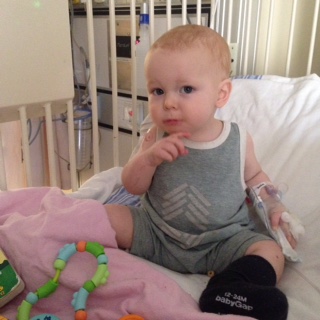
Mac at Sick Kids Hospital

Type 1 Diabetes Sucks

I HATE TYPE 1 DIABETES. I am tired, like really f’ing tired.

I am going to post this just once. I am going to allow myself to rant and rave and let out all of the anger and frustration and the deep sadness in my soul.

Sadness that this has happened to our little boy and sadness because I read about all the other children and adults who too go through this. I am going to do this because I realize that I spend most of my time in survival mode and while I am often near tears, a cool nine months in, at the time of this post, I must be strong and I must try to make diabetes part of our life not our entire life for our sweet Mac and for Isabella my step-daughter – though most days it seems like it is bigger than us.

I absolutely feel “lucky” that it is T1D, not severe allergies, not cancer or anything else and when we are at the hospital surrounded by so many sick children, I am relieved that he “just” has T1D and not something else.

I well up for these families and I can only imagine how much they are going through – though I know because we go through it every day and every night. I am frightened that he is going to go to sleep and not wake up – I had just gotten over the fear of SIDS when this happened so I have not once slept through the night in the 19 months since he was born. I have not yet begun to allow myself to think about all the other possible complications associated with this shitty autoimmune disease that could ravage my beautiful baby boy’s body in the future.

While some days, and some nights, are better than others mostly this disease is relentless and always present and there is no cure.

I want to scream at the people who say “At least you know what it is” my dear(s) you have no idea what the fuck you are talking about.

We are exhausted pretty much every day. Prior to every meal our son requires a finger prick (I cross my fingers every time) and an injection – both of which require several steps to execute. When he gets sick we know we are in it for the long haul – we have to also check his ketones and his blood more regularly and increase his injections.

We cannot just grab Mac and run out of the house, we need to ensure we have packed both his needles (just in case something happens and we are stuck somewhere), low carb snacks, fast acting sugar, blood glucose monitor, water (if his levels are high he needs to drink more), plus all the other regular baby gear.

Yes, like most parents, I forget stuff but in our case if it is his low carb counted food, fast acting sugar, water or his insulin “kit” I feel even more shitty as my son could go into a coma if he goes low or feel really sick if he is high.

Like the time when I was still on maternity leave and out for a nice lunch with a friend and as I went to give him his insulin with his lunch I did not have enough for even half his dosage. It ran out. I had no insulin to give my son. Awesome.

My tears sometimes drip over Mac as he sleeps, my soul a little sad. My beautiful boy who knows how to put the testing strip in the glucometer, who pressed the insulin pen (no needle) into his skin and the lancet to his finger, as he had seen us do before. My son who will know no differently.

But I know and I read the heartbreaking stories of all of the other children and teens and adults who have grown up with this disease. The thousands of finger pricks, the site changes, the high and lows (both of which make you feel like complete crap) the carb counting…the everything all day and night.

There are the days when our minds completely fail and we give him the wrong dosage or the wrong needle – if we give him his long acting we are screwed for the next 24 hours as he has double the insulin in his body and the schedule is all messed up.

Our pens are different colours, one is blue and one is red – you would think it would be pretty impossible to mess up, but I do, and it makes me feel like a shitty mother. I am giving my son medication that can kill him and I totally messed it up. Good one.

It absolutely sucks living with this disease and although I am trying my best, I often feel like I somehow failed him. I ate the wrong thing when I was pregnant, had him too late in life…you name it I have thought it.

But mostly I wish each and every god damned day that I could take this from him and wear it proudly so he does not have to.

There I said it. Now on with our lives and back to business.

Meditation & Gratitude

We hear everywhere how important it is to meditate and to be grateful #grateful has thousands of posts – people are looking for ways to show gratitude!
So why should you care? You may feel there are so many things you “should” be doing, and you’re suggesting I do more?! 
Believe me, I get it.  I just did a 21 day meditation and it took me 3 months to complete. But I did not pressure myself and I was actually able to work through some things, accepting more positivity into my life and forgiving someone who was triggering negative thoughts and responses from me. Just do what you can or do it when you need it most…

Benefits to Meditation:

You do not need to commit to hours of mediation a day! Start small, cut yourself some slack. Just five minutes a day of “non-doing” may be enough to clear your mind, practice self-compassion, increase your mood, your immune function and even boost your brain function.

Simply put, mindfulness can be reduced down to being aware. Aware of your feelings, your breath, your state of being, your environment. If you can pause to recognize when you are starting to go ‘off’ you can slow down and use a technique that works for you to reset. Sometimes all it takes is a simple pause to take a deep breath (or 10) or just moving your body. You will start to recognize what works for you.

Here are some little ways to incorporate mediation & mindfulness into your life:

Do More Of – take small little breaks, especially if you feeling anxious at work or had a rough day with a friend or partner.

I use an simple mantra that I learned from Gabby Bernstein:

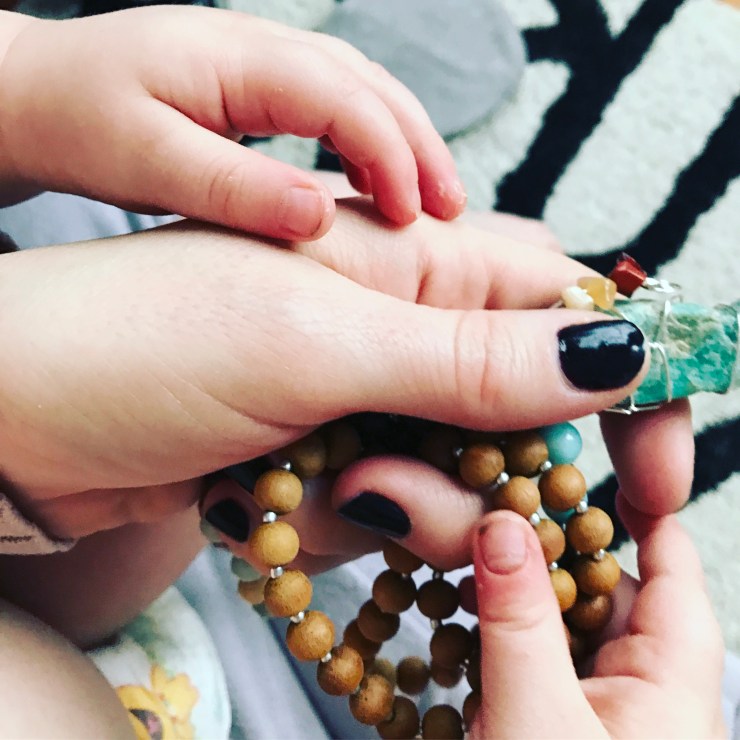
Press each finger firmly into your thumb as you recite this simple mantra: “Peace. Begins. with Me.” Breath in and out, slowly calming yourself.

Pro Tip: I do this under the table at work if I am feeling anxious. It slows me right down so I can talk calmly and peacefully. And the best part is that no one can see you doing it!

I have also shared this with my young son who, like me can get a little fiery. It’s an easy way to incorporate meditation in our children’s lives too!

Do Less Of – In our society we are bombarded with ads and social media and our own self doubt. SOOOO, let’s do less of beating ourselves up.

Start to recognize the negative talk track running through your head, that unfriendly voice. Imagine if you said aloud to another human being what you repeat to yourself?!

Try to clear your mind of that voice, simply being aware of the voice will help stop it.

Want more support? Grab a copy of the book “The Untethered Soul” by Michael A. Singer (available on Audible). One of the most memorable parts of the book was when Michael talks about the voice in our head.

According to Singer, the voice inside your head, your “inner roommate”, is the main obstacle to realizing your true self. Because this voice speaks to you as the voice of your own mind, you’ve mistakenly come to believe that it is you.

Give yourself some loving kindness. Each time you catch yourself saying something negative take a breath, do a mantra, reset.